
News | 9 June 2026 | Article
How to Adress the Role of Intermediaries in Sustainable Food Systems in Central-Eastern Europe?
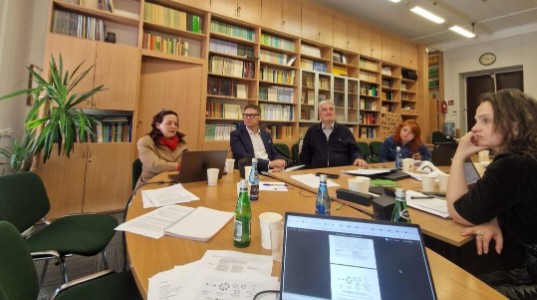
Insights from the Polish Territorial Lab in person meeting (Agricultural and Food Economics of the Polish Academy of Sciences (IRWiR PAN), Poland)
FoSSNet territorial and systemic labs
Territorial and systemic labs in FoSSnet are knowledge-society-policy interfaces that aim to transform food systems from a place-based perspective. This includes understanding the dynamics of food systems in a specific territory, mapping the research needs and knowledge gaps and providing co-created responses in order to transform food systems into more sustainable and more just forms.
The work of the labs is supported by the FoSSNet Knowledge Hub, composed of 20 experts who provide complementary contributions and solutions to the scientific challenges and knowledge gaps identified within FoSSNet.
The Polish Territorial Lab is primarily focusing on Sustainable food systems in Central-Eastern Europe (CEE), exploring the role of intermediaries in transformation processes. The aim is to develop guidance and policy recommendations that can support national strategies for transforming the CEEC food system. It also promotes knowledge exchange between CEE and the rest of European community, while supporting business innovation, research and development based on experiences from Western/Southern/Northern Europe, which could enhance transformation processes in the CEE region.
Food system transformation in CEE remains limited partly because of underdeveloped intermediation. Intermediaries represent organizations or actors facilitating collaboration, innovation and coordination between two or more parties by bridging multiple actors and their processes. Increasing attention has therefore been given to understanding the types, roles, mechanisms, influence, and evolution of intermediaries.
The in-person meeting brought together international experts to discuss major challenges facing European food systems including climate change, social inequalities, innovation pathways and structural transformation. The programme included three closed methodological working sessions, a public seminar with the KH panel, and an open workshop with the Polish Food Systems LAB.
The final empirical framework was adopted as a three-step process: desk-based mapping in Western, Northern, Southern, and Central Europe; questionnaire-based mapping in CEE countries; and qualitative case studies.
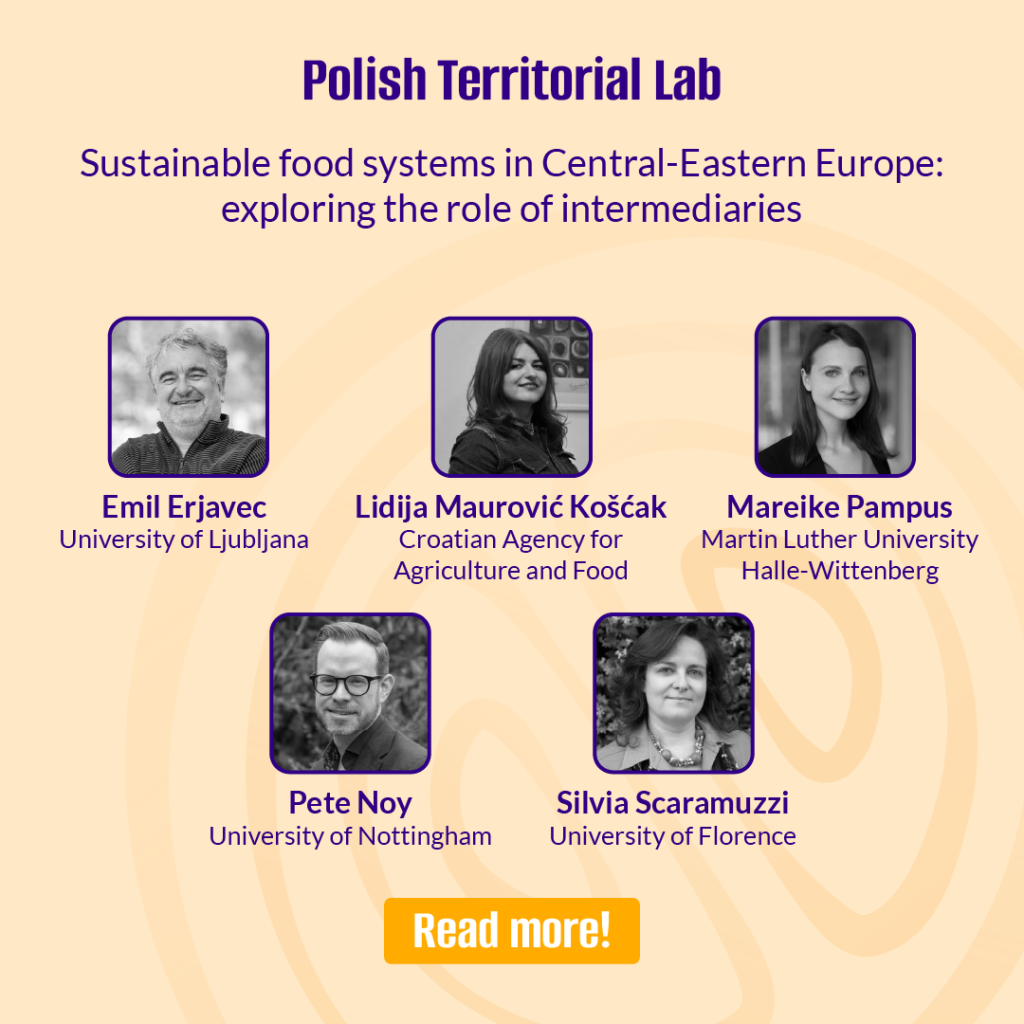
The public seminar “Food Systems in Europe: Experiences, Barriers and Perspectives of Transformation” was recorded and is publicly available on the IRWiR PAN YouTube channel (https://www.youtube.com/watch?v=Lokz5ngZnvY). Among the featured talks, Prof. Silvia Scaramuzzi presented “Mapping Food Systems Research and Innovation Needs and Gaps in Europe”, outlining current research priorities and identifying gaps in European approach to food system innovation, while Prof. Emil Erjavec followed with “Is the Food System Transition Ignored in Central and Eastern Europe? Insights from Slovenia”, offering an in-depth analysis of transformation barriers in the region through a Slovenian case study.
The meeting also focused on finalising and piloting the intermediaries questionnaire and collecting observations on the Polish ecology of intermediation through workshop discussions with 24 Polish intermediaries’ representatives, which will contribute to the country report and guide the case-study questions. During the workshops the first version of the PL LAB policy brief was officially presented.
The group discussions moderated by the KH experts highlighted several key challenges, including gaps in supply-chain and market data, limited food literacy, insufficient infrastructure for short supply chains, weak knowledge translation between science and industry and fragmented governance. At the same time, they also identified positive developments such as animal-welfare schemes; growth of farmer-to-consumer direct sales and a consumer segment increasingly willing to pay for higher-quality food products.
Voices from the group:
“From what I saw in Warsaw, I had the feeling that there is some entrepreneurship — ‘if the state cannot do it, then we do it’ — and that’s the state of mind that I really admire and that I would like to give a stage.”
“We had a pilot version of a questionnaire done on paper with participants in the room — quite diverse — and asked them to give written feedback and incorporate that into the redesign. This is a great example of co-production of knowledge.”
Other news
July 16, 2026Article
How True Cost Accounting can inform decision-making in food systems?
The Systemic Lab is focusing on exploring how pricing and reward guided by True Cost Accounting can help address hidden social and environmental sustainability impacts in the food system.
July 7, 2026Article
What are the Leverage Points for an Inclusive Food-Oriented Knowledge & Innovation System?
The Riga territorial lab explores how inter- and transdisciplinary collaboration can drive food systems transformations.
July 7, 2026Article
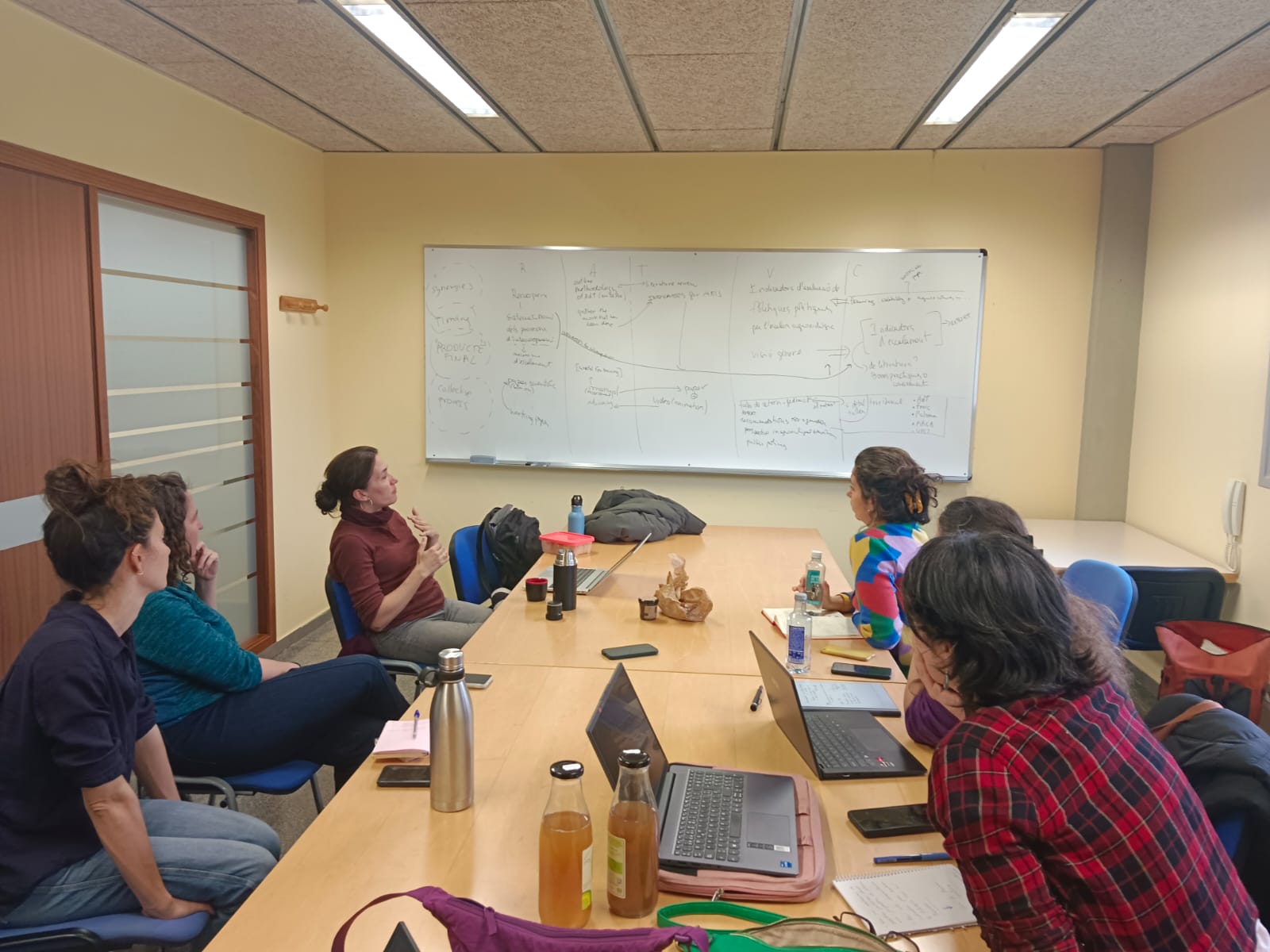
How to approach Agroecological Initiatives for Food Systems Transformation?
The Catalan Territorial Lab is actively involved in exploring the Scalability of Agroecological Initiatives for Food Systems Transformation.