
News | 7 July 2026 | Article
What are the Leverage Points for an Inclusive Food-Oriented Knowledge & Innovation System?
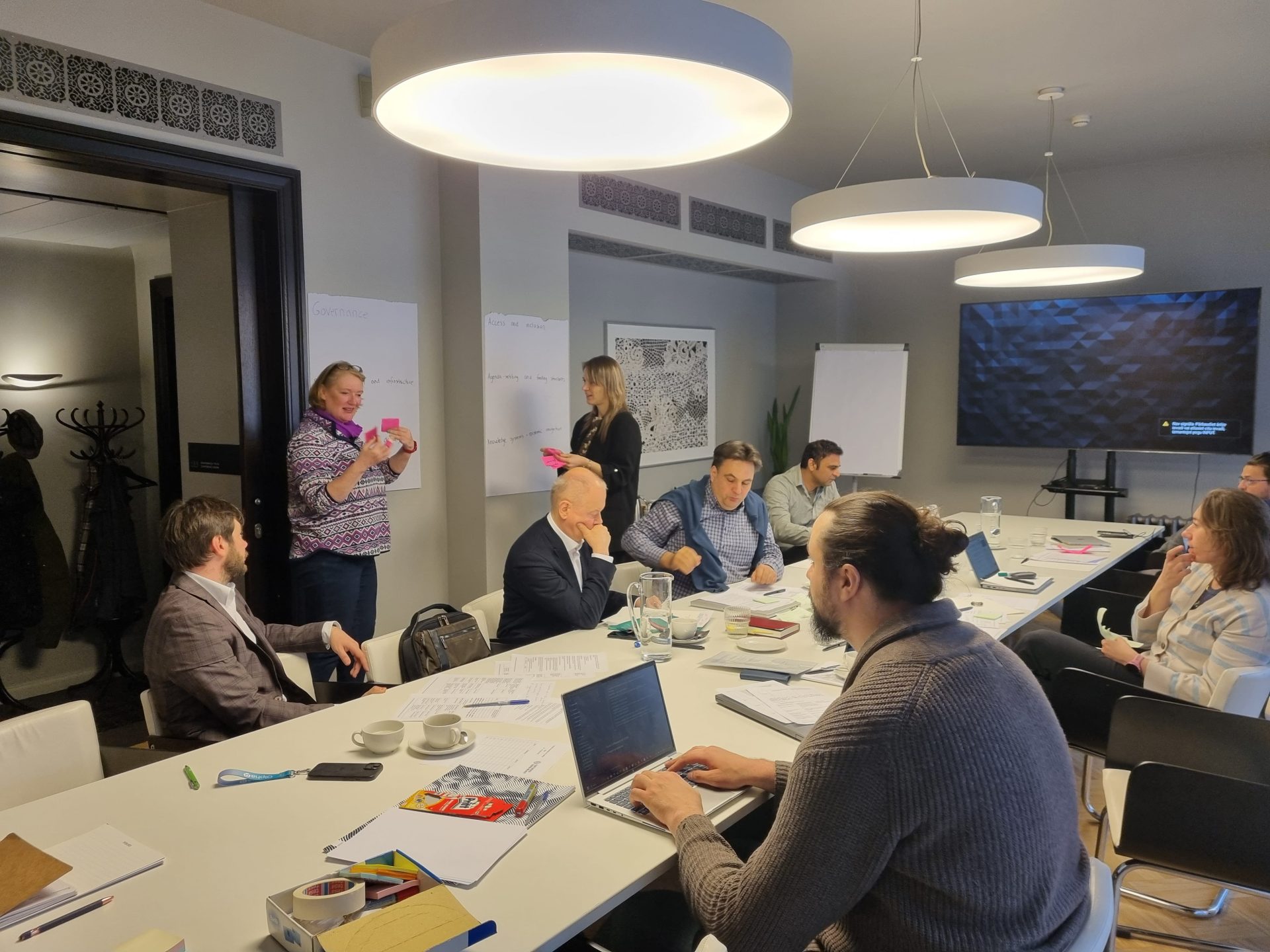
Insights from the in-person meeting of the knowledge hub on inclusive Food-oriented K&I systems in Riga
FoSSNet territorial and systemic labs
Territorial and systemic labs in FoSSnet are knowledge-society-policy interfaces that aim to transform food systems from a place-based perspective. This includes understanding the dynamics of food systems in a specific territory, mapping the research needs and knowledge gaps and providing co-created responses in order to transform food systems into more sustainable and more just forms.
The work of the labs is supported by the FoSSNet Knowledge Hub, composed of 20 experts who provide complementary contributions and solutions to the scientific challenges and knowledge gaps identified within FoSSNet.
The KH focuses on the leverage points for an inclusive food-oriented knowledge & innovation (K&I) system, while the Riga territorial lab explores how inter- and transdisciplinary collaboration can drive food systems transformations. Together, the lab and the KH aims to identify leverage points and key conditions for an inclusive K&I system for food.
Food systems transformation requires a K&I system that values diverse forms of voices and knowledge, and fosters inclusive inter- and transdisciplinary collaboration. However, integration is not neutral. Without explicit attention to power dynamics and structures, collaborative processes risk reproducing exclusion, appropriation and subjugation.
Within this context, FoSSNet examined existing collaborative food system environments, identifying mechanisms of both inclusion and exclusion, and developed a toolbox of methods and approaches for inclusive inter- and transdisciplinary collaboration. Territorial labs in Riga, Catalonia, and Poland were established to foster place-based collaboration among community members, local authorities, scientists, and other stakeholders in generating knowledge, insights, and actions towards food systems transformation. The Riga Territorial Lab, in particular, highlighted the need for improved methods to support inter- and transdisciplinary collaboration, especially in the context of local urban food systems initiatives and East–West European collaboration dynamics.
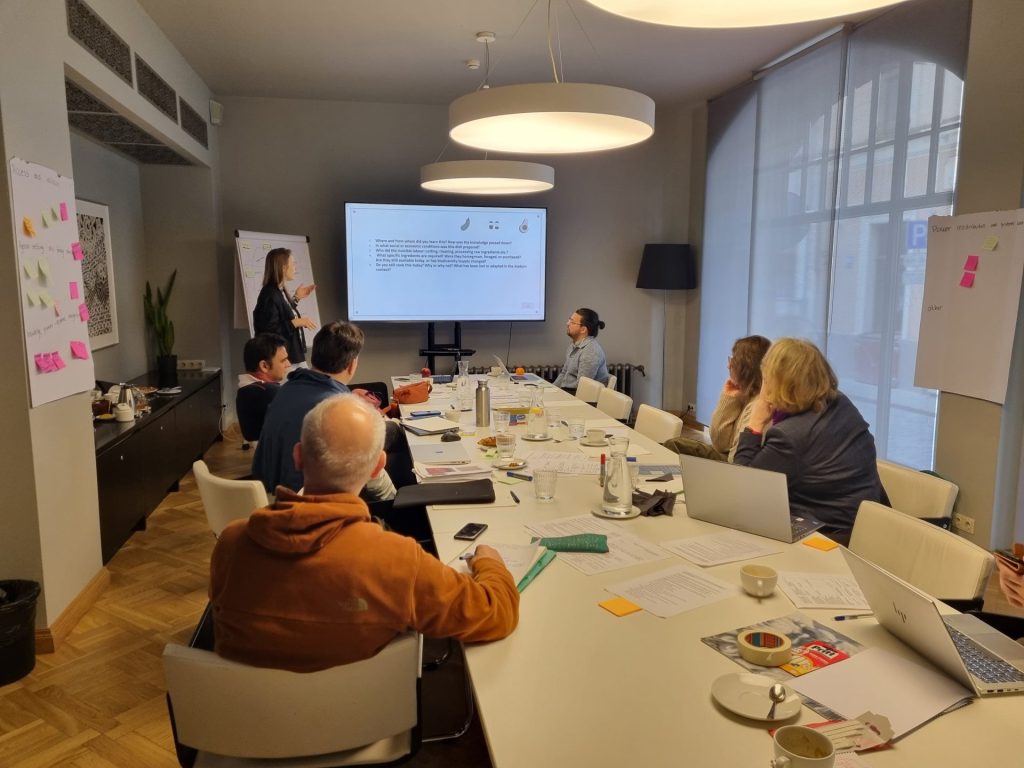
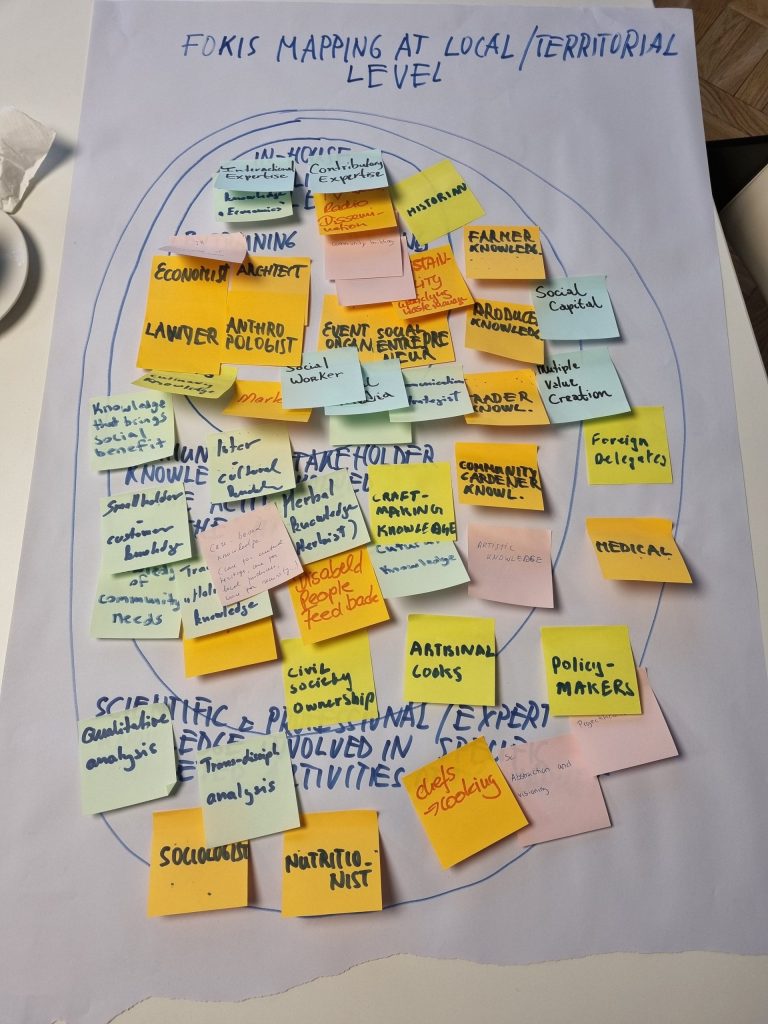
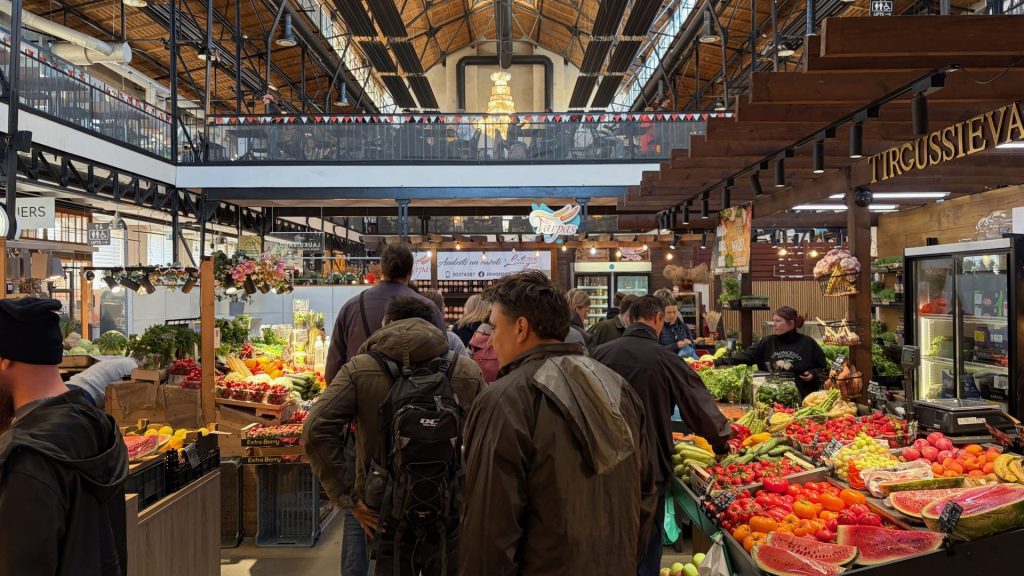
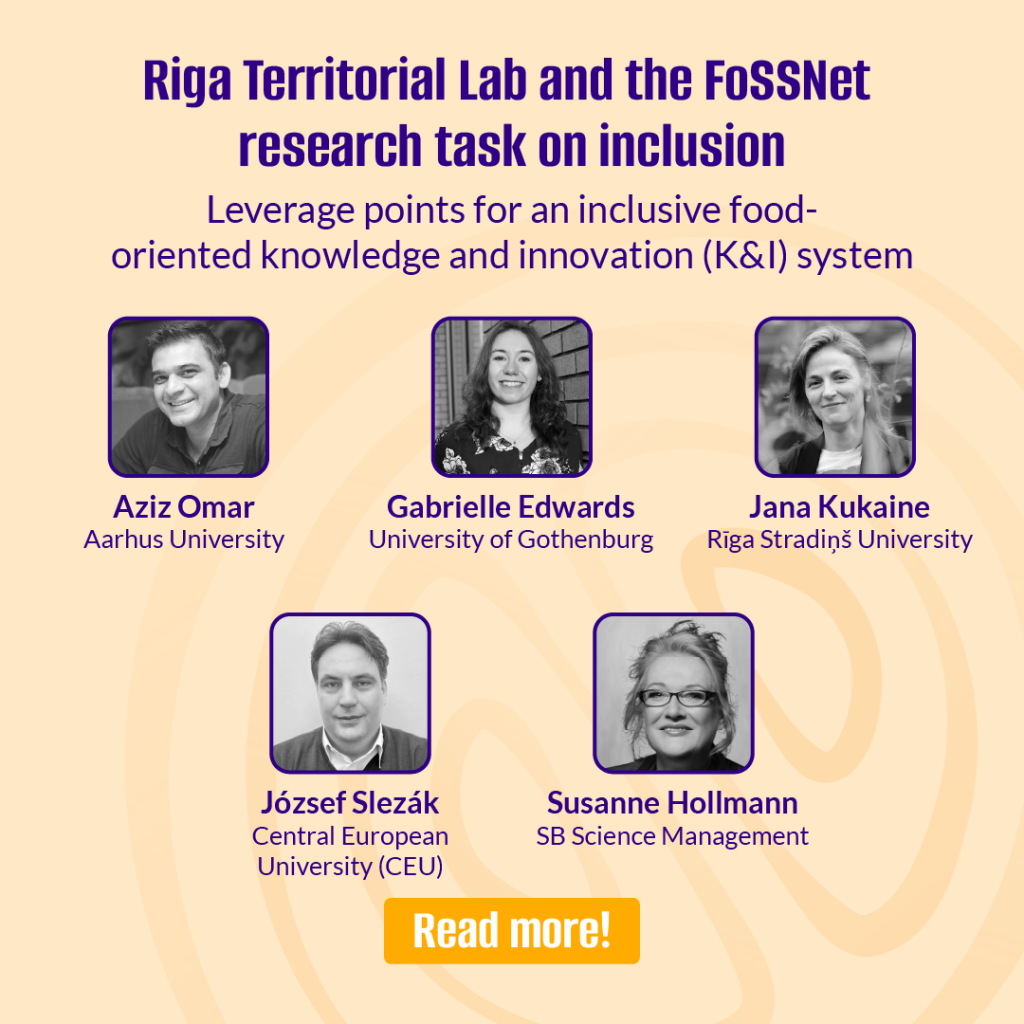
During the latest in-person meeting, KH and FoSSNet experts gathered to identify leverage points for food systems transformation across seven domains. Participants also visited the Riga territorial lab and met with managers of the Āgenskalns Market to explore local initiatives, including the Latvian market digital platform and association model, funding and support mechanisms, and challenges related to participation in research projects. Discussions focused on strategies for promoting inclusivity, such as prioritising small farmers and community organisations, participatory approaches to market design and development, and culturally diverse events that support the inclusion of marginalised groups. Further insights focused on knowledge diversity and collaboration, including mapping the Food-oriented K&I system (FOKIS) at the local scale and the use of Jana Kukaine’s “The Recipe as a Living Archive” workshop which uses family recipes as an entry point for exploring inclusion and exclusion dynamics.
The KH working group agreed on several future outputs, including a policy brief, citizen summary, a policy roundtable, and a potential academic publication, while prioritising funding structures and capacity building as key areas for identifying leverage points for future work.
Other news

October 15, 2026Article
Shaping the Future of Food: Is Europe Ready to Educate the Next Generation of Food Systems Changemakers?
The Systemic Lab is focusing on exploring how pricing and reward guided by True Cost Accounting can help address hidden social and environmental sustainability impacts in the food system.
July 16, 2026Article
How True Cost Accounting can inform decision-making in food systems?
The Systemic Lab is focusing on exploring how pricing and reward guided by True Cost Accounting can help address hidden social and environmental sustainability impacts in the food system.
July 7, 2026Article
How to approach Agroecological Initiatives for Food Systems Transformation?
The Catalan Territorial Lab is actively involved in exploring the Scalability of Agroecological Initiatives for Food Systems Transformation.